
Rosie Labs: Milk Painting
 Grade
Grade - Our STEM projects are designed so that participants get it wrong before they get it right. You will observe your students struggling as they attempt to create their own STEM projects. This process is an empowering experience, building perseverance, frustration tolerance and growing overall confidence! With your support, students will step out of their comfort zones to think, build and problem-solve for themselves.
-
Productive Struggle Moments
- Patience and restraint are the skill being built. Over-swirling turns four colors into gray-brown. Over-soaping kills the effect. The tray rewards students who watch, wait, and make one deliberate move, and that self-control is real scientific discipline.
- Adding food coloring drop by drop takes a steady hand. Splashes still make art.
- Laying the paper down lightly so it floats rather than sinks takes two or three tries. A soggy print is feedback, not failure. Ask: "What will you do differently with sheet number two?"
Time: 30 to 40 minutes (plus drying time for the art)
Big idea: Liquids have properties, including an invisible “skin” called surface tension. Students break that skin with a single drop of soap and capture the explosion of color as art.
Standards Snapshot: Virginia SOL + NGSS
Pick your grade band. The build is the same, the thinking changes.
| Grade | Virginia SOL | NGSS | Students walk away able to… |
|---|---|---|---|
| K | K.3: physical properties of an object can be described · K.4: water has properties (it flows and takes the shape of its container) | — | Describe what the milk looks like, feels like, and does, and show that it takes the shape of its tray. |
| 1 | 1.3: objects are made of materials with observable properties | — | Compare how the milk behaves before and after the soap touches it. |
| 2 | 2.3: matter can exist in different phases, including liquids | 2-PS1-1 | Name the properties that make milk a liquid, and describe the change they caused with evidence. |
| 5 | 5.7: matter has properties and interactions (primary fit) | 5-PS1-1 | Explain the burst using particles too small to see: soap breaking the surface tension and chasing the fat. |
| K–5 | X.1: Scientific and Engineering Practices | — | Predict, observe closely, test a variable, and explain results from evidence. |
Practices exercised (both frameworks): asking questions and predicting · observing and describing change · planning and carrying out comparisons · constructing explanations from evidence. NGSS Crosscutting Concept: Cause and Effect · Scale (parts too small to see, grade 5).
Curiosity & Wonder
Hold up the tray of milk. Do not explain anything.
“This milk looks completely calm, right? Nothing happening. But actually, right now, the top of this milk is holding itself together like a trampoline skin, and it has been doing that this whole time. I have one drop of soap on this Q-tip. What do you think happens when the soap touches that skin? Nothing? Something? Vote.”
Take the vote and record it. Then set the rule that makes the whole lesson work: “Here is the catch. The magic only happens once per tray. So before anyone touches anything, we plan.”
The Build
Materials per student or pair: tray, milk, food coloring (4 colors), Q-tips, dish soap, paper sheets.
- Fill the tray with milk and let it settle.
- Drop in at least 2 drops each of four food coloring colors. Notice: the drops mostly sit there. Why aren’t they spreading?
- Dip the end of a Q-tip generously in dish soap.
- Touch the soapy Q-tip to the milk right next to a color drop. The color BURSTS away from the soap.
- Gently swirl the Q-tip to form rivers of color, but stop before the colors turn to mud.
- Lay one sheet of paper flat on the milk’s surface, press lightly, and count to five.
- Lift gently and set aside to dry. More sheets can capture more prints before the colors fully blend.
Productive struggle moments
Our STEM projects are designed so that participants get it wrong before they get it right. You will observe your students struggling as they attempt to create their own STEM projects. This process is an empowering experience, building perseverance, frustration tolerance and growing overall confidence! With your support, students will step out of their comfort zones to think, build and problem-solve for themselves.
- Patience and restraint are the skill being built. Over-swirling turns four colors into gray-brown. Over-soaping kills the effect. The tray rewards students who watch, wait, and make one deliberate move, and that self-control is real scientific discipline.
- Adding food coloring drop by drop takes a steady hand. Splashes still make art.
- Laying the paper down lightly so it floats rather than sinks takes two or three tries. A soggy print is feedback, not failure. Ask: “What will you do differently with sheet number two?”
The Investigation
Before the soap: ask why the food coloring drops just sit on the milk instead of spreading out. Let students puzzle. (The surface skin is holding everything in place.)
The burst, explained by grade band:
- K to 1: The top of the milk holds together like a skin. Soap pops the skin, and the colors rush away.
- Grade 2: Milk is a liquid: it flows and takes the shape of its tray, but its surface holds together. Soap changes that property, and the change is something we caused and observed.
- Grade 5: Milk is made of particles too small to see: water, fat, sugars, and more. At the surface, the particles cling to each other, making surface tension. A soap particle has two ends, one that loves water and one that loves fat. When soap lands, it breaks the clinging at the surface and dives after the fat, shoving everything (including the color) out of its way. The chaos we see is evidence of particles we cannot see.
Skills in Practice
- “I predict the soap will ___ because ___.”
- “Before the soap, the milk ___. After, it ___.”
- “The burst stopped working because ___.”
- “The ___ milk made the biggest burst. I think that is because ___.”
Real-World Connection
This experiment is exactly why soap works. Grease on dishes and oils on your hands do not rinse off with water alone, because water and oil ignore each other. Soap grabs both at once, one end holding the water, one end holding the grease, and pulls the grease away, just like it chased the fat in the milk. Every hand wash is a milk painting without the food coloring. Bonus wonder: water striders walk on ponds using the same surface skin students just popped.
Evidence of Learning
- K to 1: Student points at their painting and tells what the soap did to the milk in their own words.
- Grade 2: Student names two properties of the milk (it flows, it takes the tray’s shape, its surface holds together) and states the change the soap caused.
- Grade 5: Student writes 2 to 3 sentences explaining the burst using the words surface tension and particles or molecules.
Vocabulary
- matter: anything that has mass and takes up space.
- property: a trait describing how matter looks, feels, or acts.
- liquid: matter that flows and takes the shape of its container.
- surface tension: the clinging together of a liquid’s particles at its surface, forming a skin strong enough to hold up very light things.
- molecule (grade 5): a tiny particle of matter, far too small to see, made of atoms joined together.
Watch The Video
https://youtu.be/-1JH3IkkJLI
Required Materials
- milk
- watercolor paper
- dish soap
- food coloring
- tray or shallow dish
Optional STEM Activities
Resource 1
Drops on a Penny (grades 1+, the measurement version of today’s lesson). Predict how many water drops fit on a penny before the dome collapses, then count drop by drop with a pipette. Most students guess low by a lot; surface tension holds a surprisingly tall dome. Chart the class results. Advanced: repeat with soapy water in the dropper and compare the counts. The numbers ARE the evidence that soap weakens surface tension, turning today’s qualitative burst into quantitative data.
Resource 2
The Power of Soap (all grades). Show the Rosie video on soap and germs, then connect it back: the same fat-grabbing trick that made the painting is what pulls the oily coating off germs when we wash our hands for 20 seconds. The art project and the health lesson are the same molecule doing the same job.
Rosie Makes Milk Painting
https://handsonstem.rosieriveters.com/resources/rosie-makes-milk-painting/
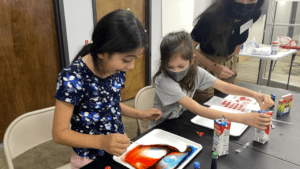
Use the power of soap to create colorful bursts of food coloring to create art with this fun Milk Painting activity!
Matter is everything around us – the table, the chair, air, and you and me! The scientific definition of matter is anything that has mass (you can think weight) and takes up space. So we are interacting with matter every second of our lives whether we are breathing in air, drinking water, or changing our clothes.
Matter is made up of molecules, which are the tiny particles that make up everything on earth. They are so tiny that we can’t see them! But they are there, and the way they are structured is what makes air, water, and clothes look, feel and act differently. Each one is matter, but the molecules are arranged very differently in each one.
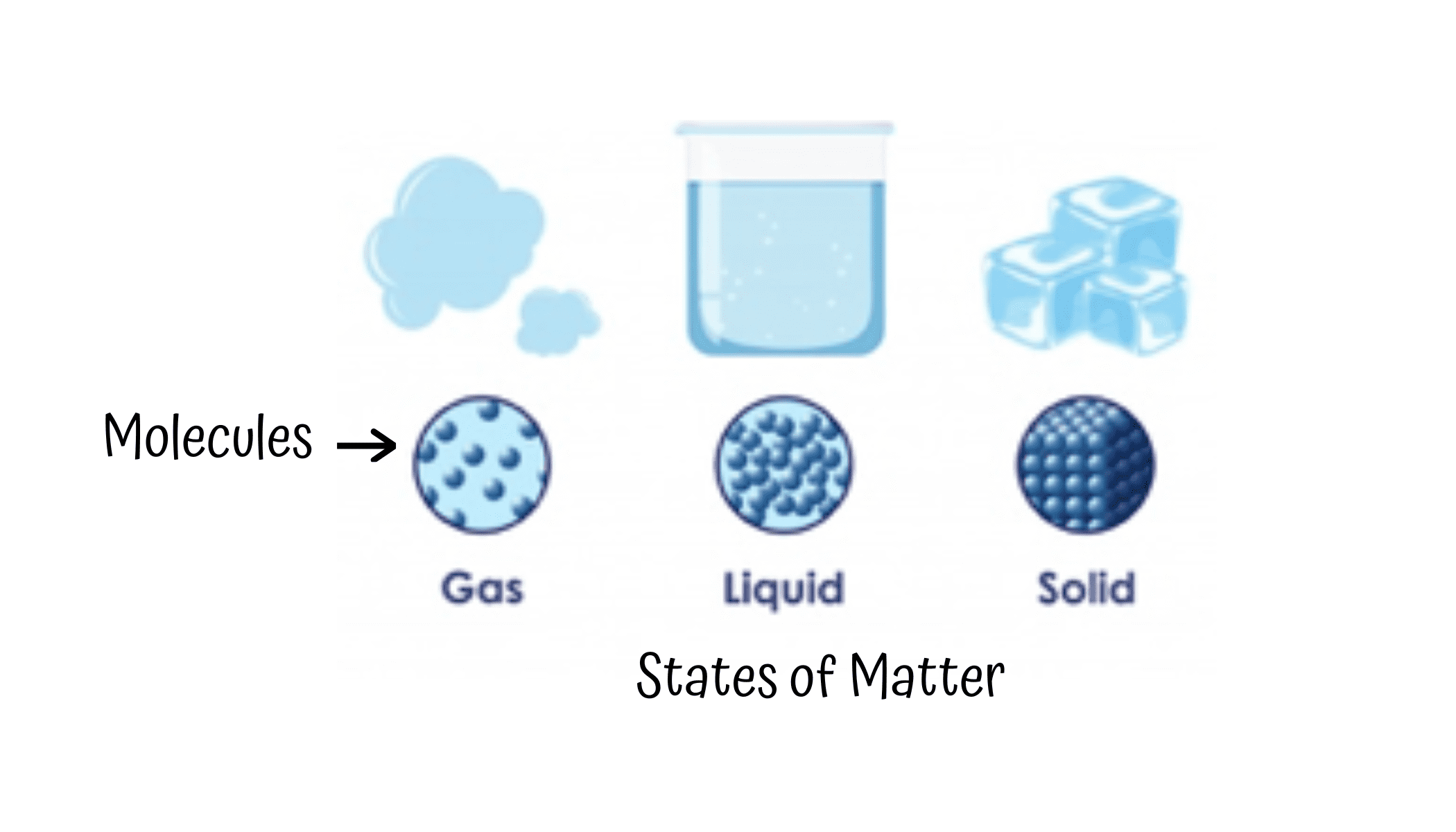
Each state of matter has properties (traits). Properties describe how something looks, feels, or acts. In this project you’ll spend some time exploring some of the properties of a liquid, or more specifically, milk!
Some properties of liquids include:
- Liquids take the shape of their container. If you were to pour your milk into a glass it would take the shape of the glass. If you pour milk into a bowl, it takes the shape of the bowl.
- Liquids move around. The molecules in liquids are farther apart than those of solids, so they can move around more. That’s why liquids take the shape of their container.
- Liquid molecules like to hold hands. If you were to pour your milk into a glass and gave the glass a little jiggle you would see that the milk at the top of the glass doesn’t seem as loose as the rest of the milk, and when it moves, it looks like it moves as one piece! The molecules at the top of the glass that are holding hands form what we call surface tension.
Milk consists of a lot of different molecules, including fat, water, sugars, vitamins, and minerals. Soap is attracted (likes to hold hands with) both water molecules and fat molecules. So when we add a bit of soap to our milk painting we move the molecules around! Some of the fat molecules move toward one part of the soap and the water molecules move toward the other part of the soap, making space between the molecules!
Ready to try milk painting at home or in your classroom? Watch the video for an overview, gather the materials listed to the right, and follow the instructions below!
Watch The Video
https://youtu.be/hzU3f5DKJis
Required Materials
- milk
- tray
- food coloring
- soap
- cotton swabs
- watercolor paper
Step-By-Step Instructions
Step 1
Fill the tray with enough milk to cover the bottom.
Step 2
Drop in at least two drops of each of color of coloring. The more variety of colors the cooler the painting.
Step 3
Generously dip the end of a cotton swab in dish soap.
Step 4
Dip the cotton swab into the milk next to a drop of color. Observe.
The soap catches the fat molecules, shifting all the other molecules of the milk and pushing them further away from each other, creating a space between them.
For example, if you have too many toys on the floor in your room it can make it hard to walk around. But, if you put all of your toys into toy boxes you have more space to play.
The soap is working like a toy box for the fat molecules (toys) in the milk. The food coloring is now free to fill the empty space in the milk!
Step 5
Before the colors get too mixed together, take one sheet of water color paper and lay it on top of the milk mixture.
Step 6
Gently lift the paper from the milk and set aside to dry.